Cemeteries as living landscapes: a designer’s approach to heritage and change
25 May 2026
SHARE


Cemeteries are community and social infrastructure, says landscape architect Megan Harshey. She has been working with local communities and Central Otago District Council to help two historic cemeteries evolve with care.
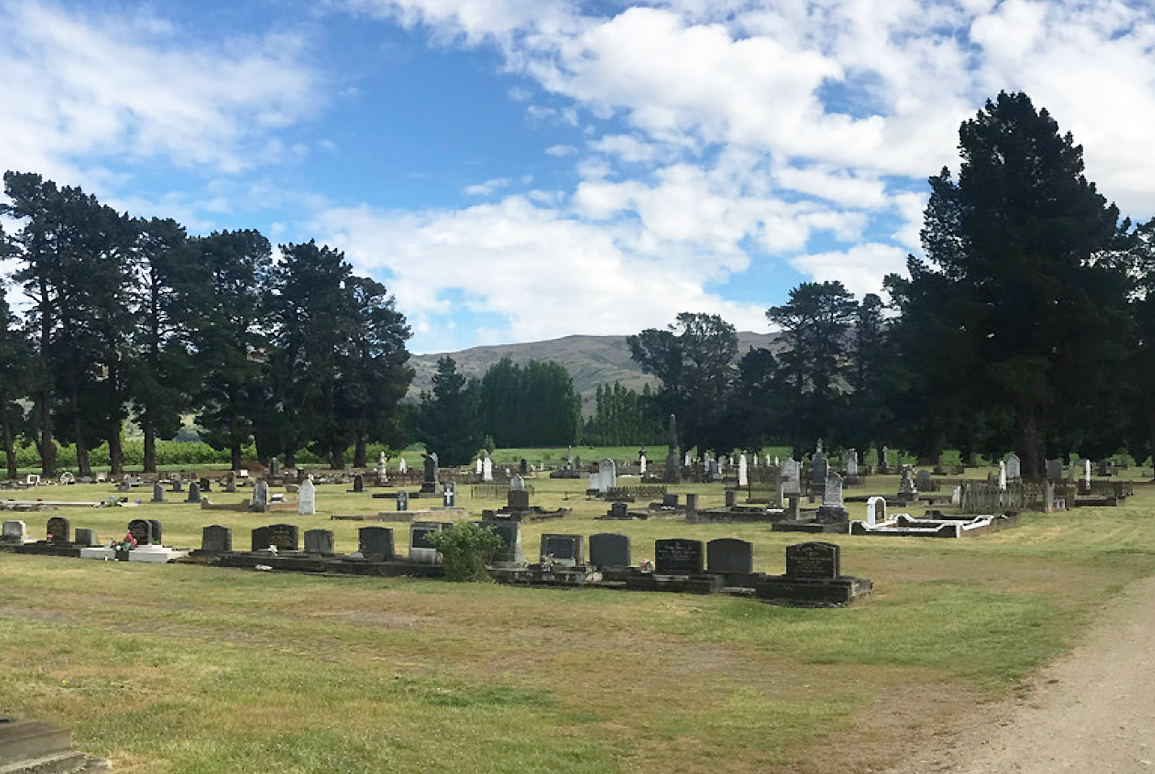
Historic cemeteries sit at an unusual intersection: they are both sacred places of private grief and public assets that must keep functioning. They are also among our most legible cultural landscapes: records of migration, faith, hardship, and community formation have been written into paths, plot patterns, trees and stone. When these sites reach capacity or face safety and access issues, doing nothing is not a neutral choice; it can mean forcing rushed decisions, compromising heritage values, or failing the families who rely on them. The real task is to update historic cemeteries in a way that safeguards identity while enabling the inevitable continued use.
Naseby Cemetery, also known as Mount Ida Cemetery, was established in 1860. It's one of Central Otago's earliest cemeteries and is surrounded by forest. The cemetery features elaborate gravestones and has historical significance, including the burial of about 56 Chinese miners.
Cromwell Cemetery is located on the southwest edge of the town. It has been in existence since the early 1900s and is divided into three sections: one for RSA War Veterans, another for memorial structures, and a third for ashes and interment sites.
As a landscape architect, I’m interested in how cemeteries can function as both heritage places and community assets. In Cromwell, we explored staged, 100‑year planning with flexible burial configurations, improved internal access, and provision for memorialisation options and potential future facilities. In Naseby, the focus was sensitive rural expansion by planning for near-term capacity while respecting the cemetery’s historic patterning and cultural narratives, and integrating practical upgrades like access adjustments and future-ready areas for ash plots and memorial elements.
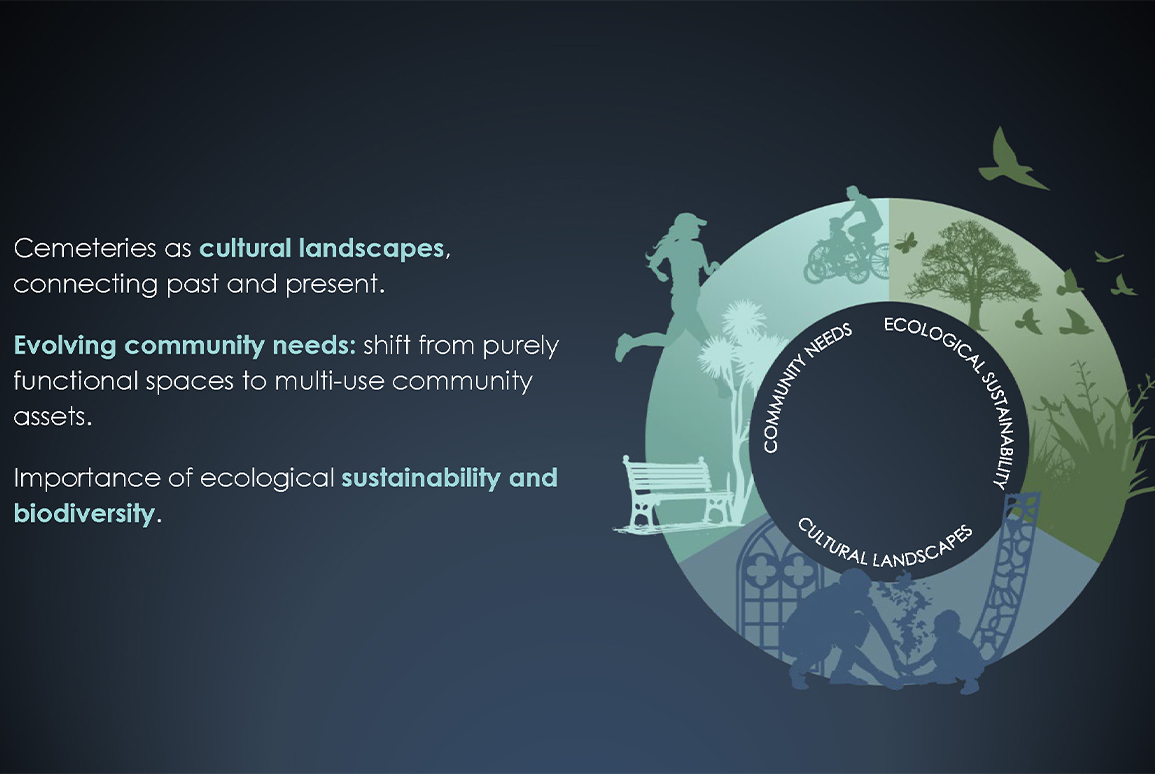
The simplest driver for change is often space. But capacity pressure is rarely just a numbers problem. In Naseby, cemetery records and current plot availability indicate only six ash plots and nine burial sites remain, with the site projected to reach capacity this year. That is not merely an operational constraint; it’s a cultural risk. When a community can no longer bury or inter ashes locally, the cemetery begins to lose its role as a shared place of remembrance; especially in smaller rural towns where connection to place is central to identity.
Cromwell’s pressure is different in scale but similar in consequence. The town has experienced strong growth, and the cemetery’s projected need (based on recent burials) is in the order of 2,100 interments over 100 years, including increasing demand for ashes. Here, updating isn’t only about adding plots; it’s about ensuring the cemetery can evolve with a growing, diversifying community while remaining dignified, accessible and safe.
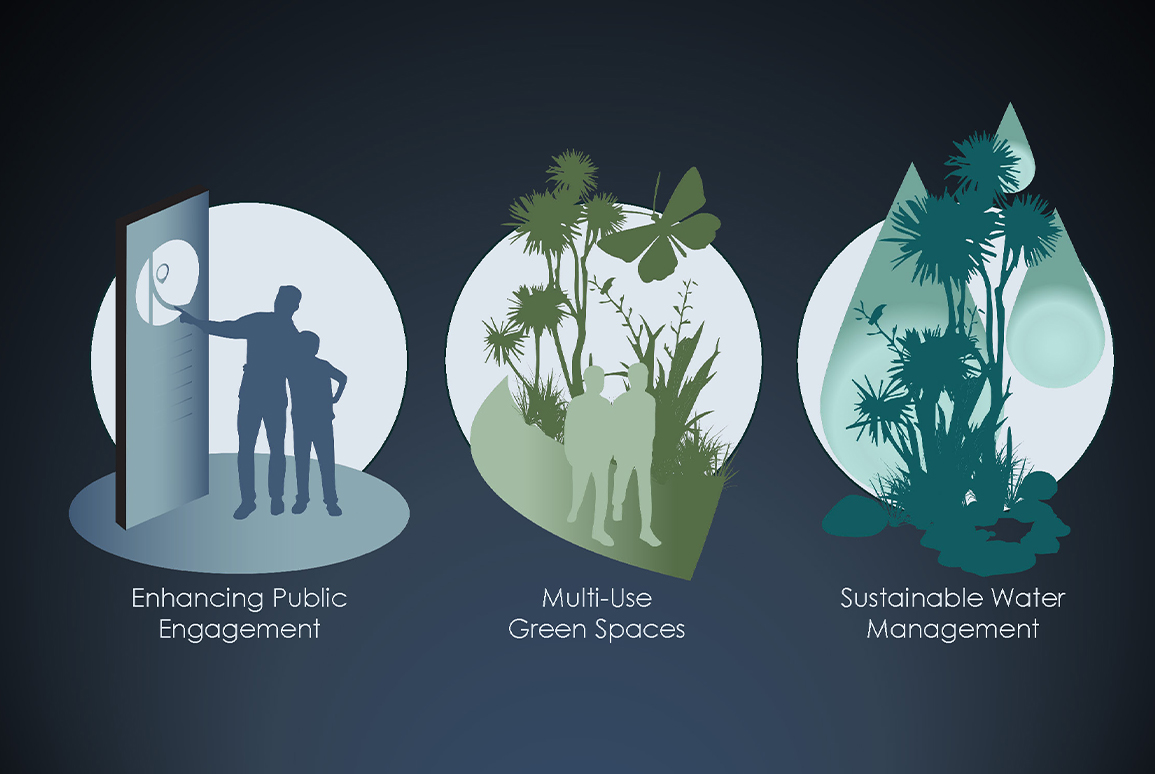
Thoughtful upgrades to historic cemeteries can deliver three forms of value that are easy to underestimate:
Heritage continuity without becoming a museum
Naseby Cemetery’s story is embedded in its layout and social history. Established in 1860, it includes distinct burial areas – Protestants on one side of the entrance, Catholics on the other – and a legacy of Chinese burials historically located outside the wall, with several gravestones still visible near the perimeter. It also contains many paupers’ graves, sometimes marked by sarsen stones, which are as much part of the site’s heritage fabric as any formal monument. Updating such a place is not about uniformity; it’s about protecting its legibility, so the cemetery can continue to truthfully illustrate how the settlement formed.
A better experience for the living
“Living legacy” thinking reframes cemeteries as places people use, not just visit on anniversaries. Interpretation panels and digital storytelling, guided heritage walks, improved seating and pedestrian comfort can deepen connection while encouraging stewardship; without turning cemeteries into parks. The opportunity is subtle: when access is clear, planting is intentional, and the entrance feels welcoming, people linger and places become cared for. That social care is itself a form of heritage protection.
Ecological and landscape performance
Planting in cemeteries does real work: shelter, shade, screening, habitat, and spatial definition. Cromwell’s concept planning explicitly retains mature trees, adds boundary planting to screen surrounding properties, and acknowledges senescence: some existing trees are aging and will need monitoring and replacement over time. That’s a valuable mindset shift: historic landscapes aren’t static artefacts; they’re living systems that require succession planning.
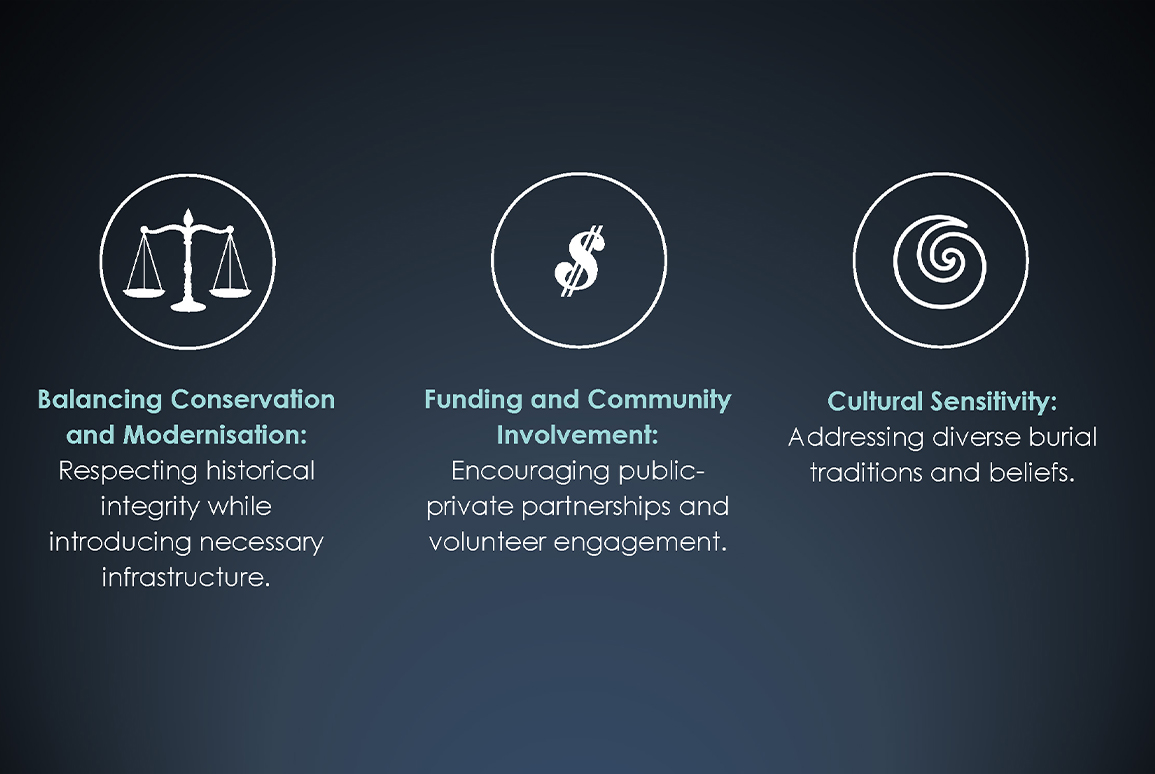
Updating historic cemeteries can be a design problem, a governance problem, and a cultural problem; sometimes all at the same time.
Balancing conservation with operational reality
Both Naseby and Cromwell adopt a principled approach: retain the existing cemetery as it is, and develop additional land in a way that complements heritage and amenity values. This sounds straightforward, but it demands restraint. New roading, turning circles, plot geometry, memorial walls, and even earthworks must be sized and located so the scale and size of the old cemetery remains the focus and the extension reads as a respectful change.
The unknown beneath the surface
Historic records can be incomplete, and unmarked graves are common. Cromwell’s experience in 2017, when two unmarked historic burials were inadvertently disturbed, shows why investigative work and careful methodology matter. Specialists assessed and reinterred remains, and temporary markers enabled GPS recording into Council systems. This process turned an unfortunate incident into an improvement in long-term records. This is the uncomfortable truth of cemetery upgrades: sometimes the most critical design decisions are invisible, and relate to information quality, risk management, and construction protocols.
Changing memorial preferences and cultural needs
Cromwell’s cemetery is already structured to serve different needs, with sections for RSA war veterans, memorial gardens/structures, and ashes/interment areas; and it has responded to demand for lower-cost memorialisation through a memorial wall sized for brass plaques. The concept plan also considers flexibility for practices that may become more prevalent (for example, allocating space that could accommodate Muslim burials) and includes cultural requirements such as provision of water at the exit. Updating historic cemeteries is also about anticipating and responding to cultural changes without losing coherence.
What the Naseby and Cromwell case studies show: stage change, and design lightly
Cromwell demonstrates the power of staged, 100-year planning. It’s a five-stage approach that sequences new plots, roading, planting, and later a potential crematorium/service area and chapel provisions, aligning development with demand and funding cycles. It also anticipates surrounding land-use pressures, which is vital when cemeteries sit near industrial and residential expansion.
Naseby demonstrates how small interventions can carry big responsibility. The cemetery is a heritage site surrounded by Douglas Fir used for recreation and ongoing logging operations. This context shapes what “appropriate” expansion looks like. The strategy indicates around 0.6 hectares is required to meet 100-year projections, with practical needs such as removing existing pines and potentially undertaking earthworks to level the extension area, while maintaining access and adding flexible future options like a memorial wall area.
The most successful cemetery updates don’t treat heritage and function as competing priorities. They recognise that operational decisions around plot layout, access, record accuracy, and planting succession are critical to how a community honours its dead over time. Cromwell and Naseby Cemeteries remind us that a cemetery can be both historically truthful and future-ready when we plan long-term and keep any interventions light and thoughtful. It’s about protecting the stories that have been, while making space for the stories still to come.

