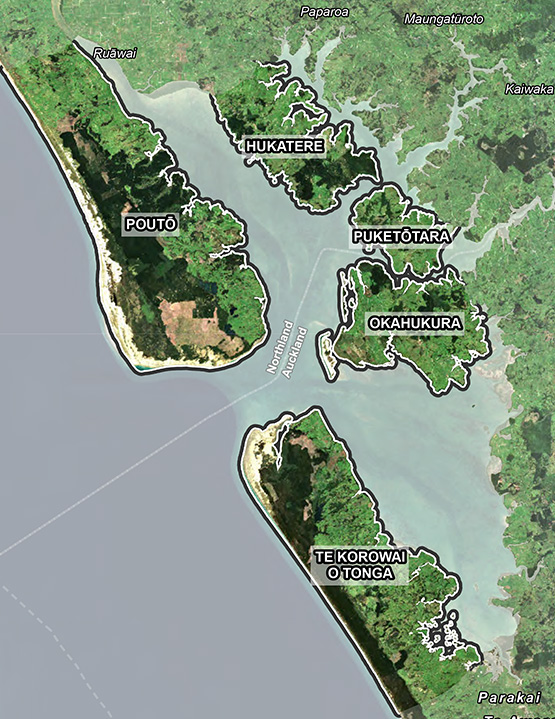
The five peninsulas span almost 76,000 hectares and contain a diverse mix of habitats, land uses, ownership patterns, and existing pest control programmes. They are also highly significant to Te Uri o Hau and Ngā Maunga Whakahii, containing wāhi tapu, wāhi taonga, and important habitat for indigenous species.
The project assessed the feasibility of eliminating possums, rats, mustelids, feral pigs, and feral cats using currently available tools and technologies. While predator elimination remains the long-term aspiration, each species presents different technical, operational, and social challenges.
Our biosecurity specialists developed a feasibility framework to assess each peninsula against a range of ecological, operational, and social factors. These included scale, habitat extent, biodiversity values, landscape defendability, community and landowner support, implementation costs, and long-term sustainability.
Drawing on experience from predator eradication programmes across New Zealand, the analysis compared the relative opportunities and challenges of each peninsula and identified where investment could deliver the greatest biodiversity outcomes.
Possums were identified as the most feasible species for landscape-scale elimination. Puketōtara Peninsula emerged as the most suitable location for initial elimination efforts due to its manageable scale, strong natural defendability, existing pest control infrastructure, and landowner support.
A staged approach was recommended, focusing on achievable early successes while continuing targeted suppression of other predator species in priority biodiversity areas. This provides a practical roadmap for future investment and implementation, helping build momentum towards its long-term vision of a healthier, predator-free Kaipara.