Boffa Miskell has worked alongside Dunedin City Council and the wider Dunedin Waste Futures team since 2018, supporting the programme from early strategic planning through consenting and implementation.
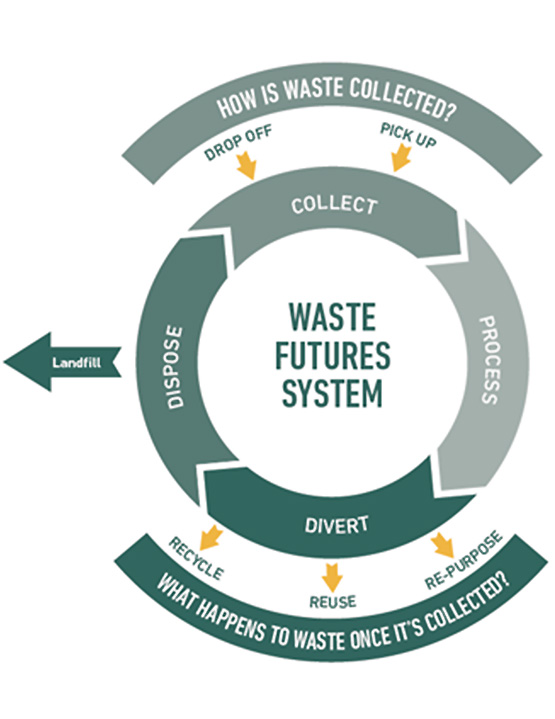
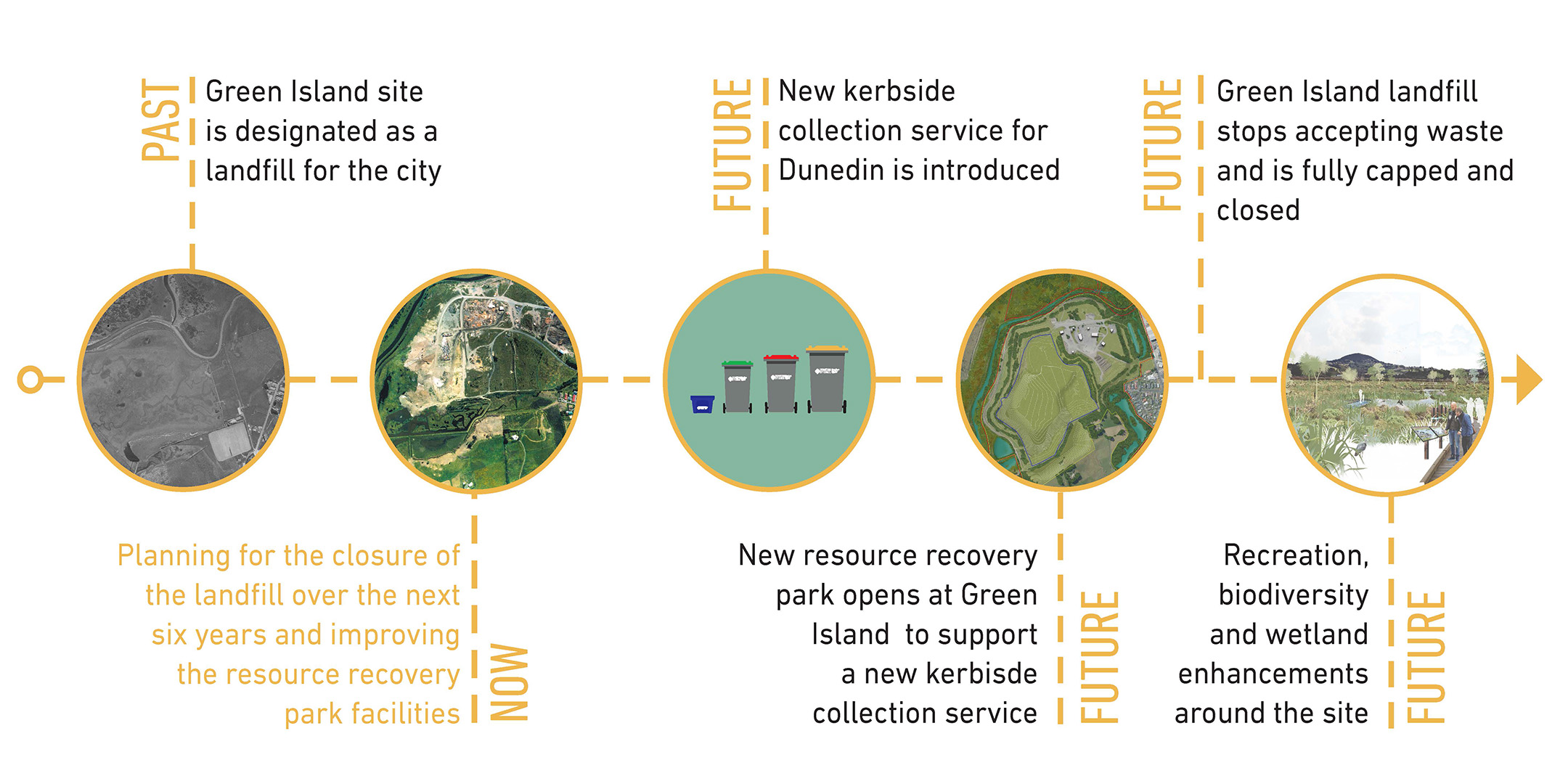
The city’s four-bin kerbside service was introduced in July 2024 following strong public support for food scraps and garden waste collection. The planned Resource Recovery Park will include a materials recovery facility, organics processing and composting infrastructure, upgraded glass sorting and storage, and an improved bulk waste transfer station. Existing community services, including the recycling drop-off area, Rummage store and education functions, will remain part of the site.
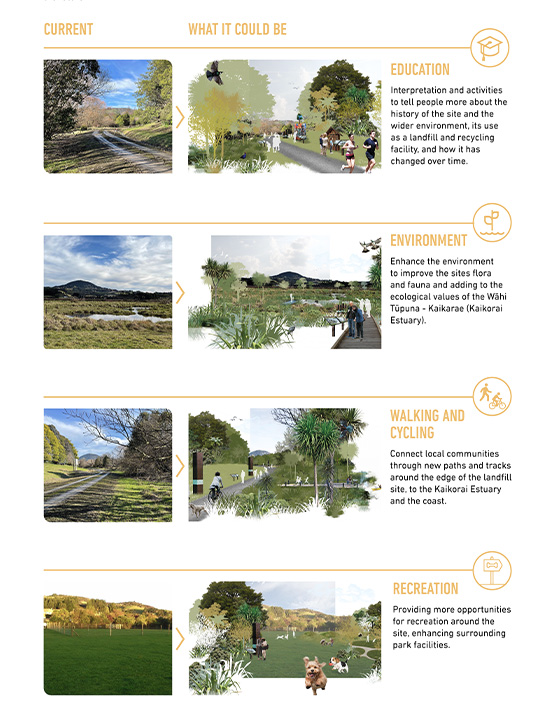
At Green Island, landfill closure has been approached as more than an engineering and regulatory obligation. The site is being progressively reframed as an evolving working landscape where resource recovery, environmental restoration, cultural values and long-term public benefit can be considered together.
Boffa Miskell led the landscape architecture, environmental planning, consenting and engagement workstreams. Our specialists developed the overarching landscape framework and prepared planning, landscape, visual and ecological assessments to support the programme’s consenting and implementation.
Landscape analysis informed the final form and staging of the landfill cap, the siting of Resource Recovery Park infrastructure, access and circulation, and the retention of established perimeter vegetation. Responding to the site’s basin setting, estuarine edge, hydrological systems, surrounding neighbourhoods and important views helped reduce visual and amenity effects while creating a foundation for native succession planting, ecological enhancement and long-term stewardship.
Collaboration with Te Rūnanga o Ōtākou, through Aukaha, has been embedded throughout the programme. Cultural values and aspirations have informed the cultural impact assessment, landscape planning, restoration approaches, consent documentation and the site’s long-term relationship with the adjoining Kaikorai Estuary.
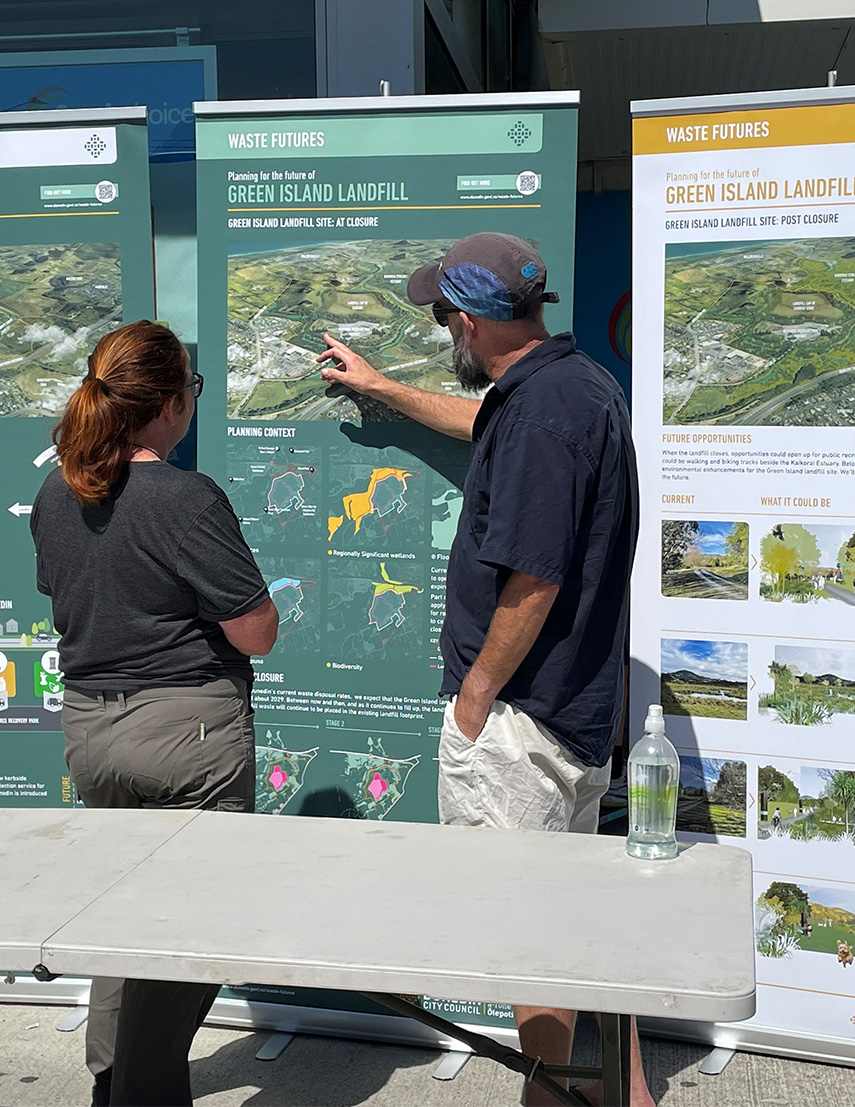
Engagement with neighbours, stakeholders and the wider community has also been treated as an ongoing project workstream. Complex engineering, planning and environmental information was translated into plain-language narratives, diagrams, staging plans, oblique illustrations and visual simulations. Portable, on-site 3D visualisation enabled proposed changes to be considered from actual viewpoints, helping build a shared understanding of how the site will evolve over time.
By maintaining one coherent narrative across interconnected projects and separate consent pathways, Waste Futures demonstrates how infrastructure planning, environmental stewardship, cultural knowledge and community engagement can support better long-term outcomes.
The programme was named the Resource Management Law Association 2026 Project of the Year, recognising its integrated, evidence-based and future-focused approach to resource management practice.