The project is led by Te Kawerau ā Maki, in partnership with Avant Group and supported by Boffa Miskell’s multi-disciplinary expertise. Te Kawerau ā Maki’s whakapapa connects deeply to this whenua, which served as a strategic corridor between Kaipara and Waitematā harbours
Rangitoopuni will establish a commercial base for Te Kawerau ā Maki through land development, hospitality, and retail ventures; and set a precedent for culturally grounded, environmentally responsible projects on Treaty Settlement land. The ecological dimension is central to Rangitoopuni’s identity.
The long-term restoration plan for the site will be implemented throughout construction:
Revegetate with Native Species: Manuka and kanuka will form the initial canopy, followed by enrichment planting of taonga species such as kauri, akeake, and harakeke.
Restore Wetlands and Riparian Margins: These areas will be planted early to stabilize soils, filter contaminants, and enhance biodiversity.
Embed Climate Resilience: Nature-based solutions, carbon sequestration through reforestation, and low-carbon construction methods will be prioritized.
Create Wildlife Sanctuaries: Predator-proofing and habitat restoration aim to reintroduce and protect taonga species, potentially establishing a Zealandia-type sanctuary.
Over time, the site will evolve into a richly planted landscape supporting birds, insects, and resilient ecosystems, while providing residents with immersive natural experiences.
A Cultural Masterplan (Mahere Matua Ahurea) has been developed to articulate:
Kaitiakitanga: Restoring and maintaining te taiao (the environment).
Rangatiratanga: Reasserting iwi identity and mana motuhake.
Manaakitanga: Creating spaces of care and hospitality.
AuaHa: Innovation and creativity in design.
Taurikuratanga: Pursuit of prosperity and thriving communities.
Embedded narratives, such as the wanderings of Ruarangi and motifs of the toopuni, will be expressed through mahi toi, naming conventions, and interpretive elements across the site, ensuring cultural visibility and continuity.
Boffa Miskell has been a key technical and design partner on the Rangitoopuni project, in support of the project application for fast-track approval for resource consent.
Boffa Miskell ecologists prepared the Preliminary Ecological Assessment for the site, which informed the location and design of development areas. They also assessed how the development could enhance regional ecological networks, specifically the North‑West Wildlink corridor.
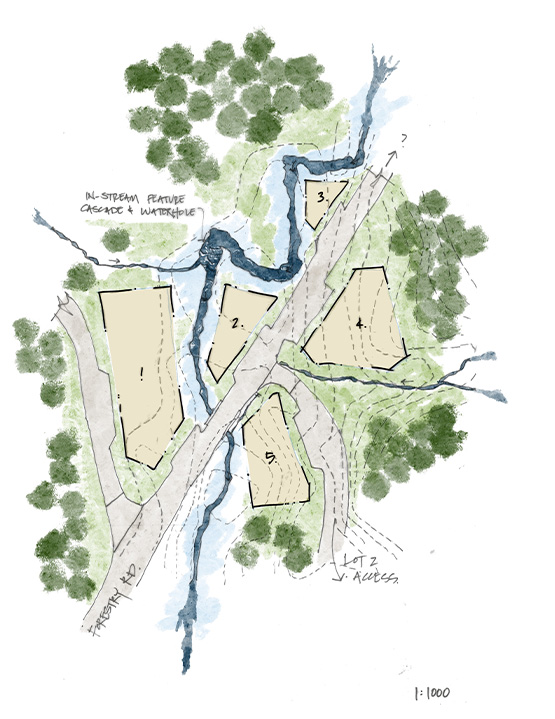
The design team prepared multiple masterplans for subdivisions of the wider site. These layouts integrate new building platforms with the existing landform, utilise former forestry access roads where possible, maintain ecological buffers and riparian corridors, and provide for a future network of accessways, roads, and restoration and amenity planting.
A site‑wide vegetation strategy supports:
- Restoration of indigenous forest restoration following pine harvesting
- Strengthening of riparian edges
- Protection of wetlands and headwaters
- Management of pests and weeds
- Ecological connectivity for fauna, particularly bats and birds
The Rangitoopuni resource consent application was granted in late 2025. Boffa Miskell will continue to provide design guidance and recommendations for on-ground landscape interventions, planting, and sustainable land-use practices to support the vision and long-term management of the site.